

Awaab’s Law and Damp & Mould: What Social Landlords Need to Know
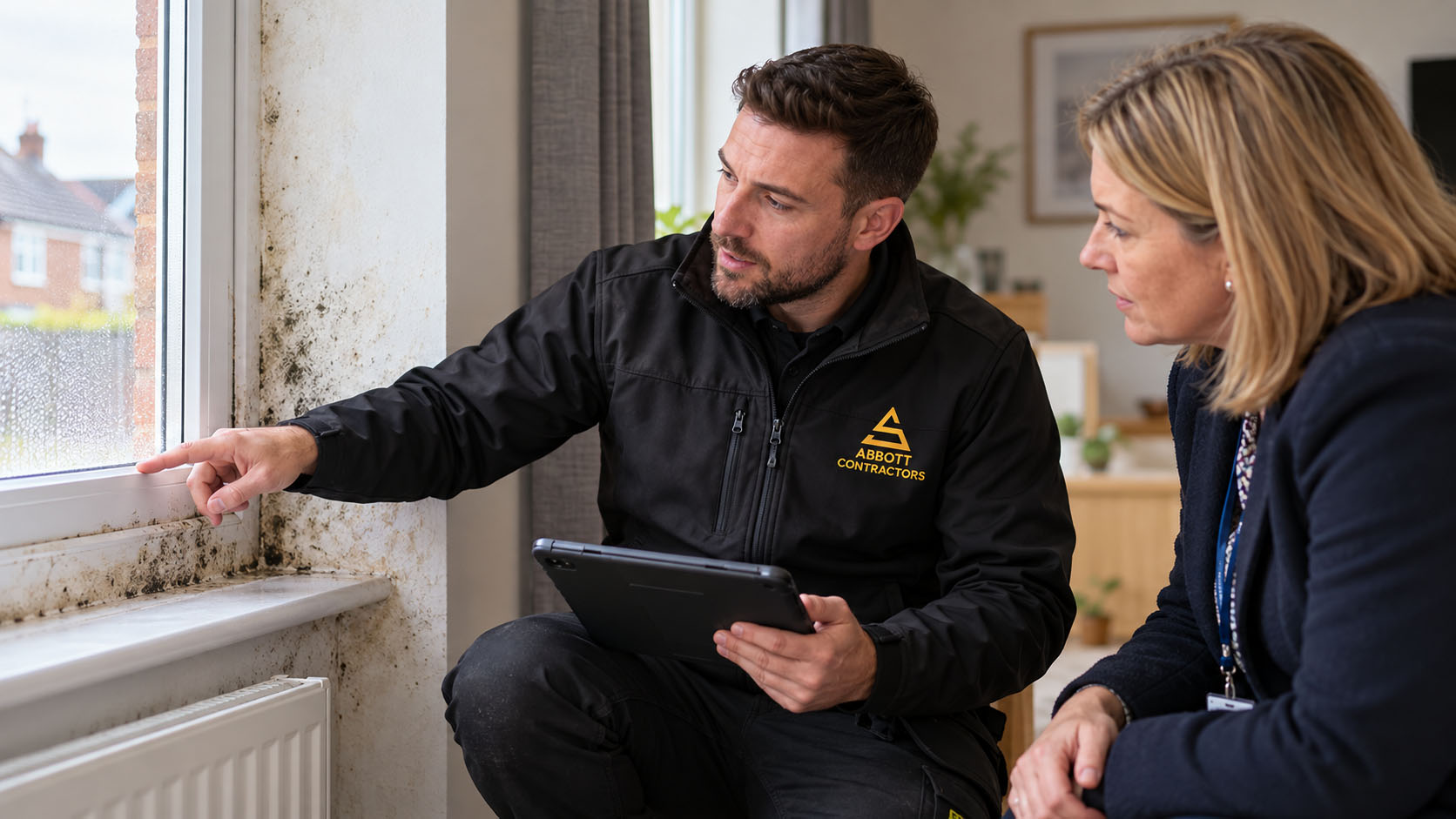
Damp and mould are no longer issues that social housing providers can afford to address with repeated surface cleaning or delayed repairs. Awaab’s Law introduced specific legal timescales for investigating and addressing serious damp and mould hazards in social housing in England.
For housing associations, local authorities and other social landlords, this places greater emphasis on prompt investigation, accurate diagnosis, clear reporting and effective remediation.
Professional damp and mould surveys and remediation can help housing providers identify the underlying cause of a problem, determine the appropriate remedial action and maintain clear evidence of the work carried out.
What Is Awaab’s Law?
Awaab’s Law is named after Awaab Ishak, a two-year-old child who died following prolonged exposure to mould in his home.
The law was introduced to ensure that serious hazards within social housing are investigated and addressed within defined timescales rather than being allowed to remain unresolved.
Awaab’s Law applies to the social rented sector in England and forms part of the legal responsibilities placed on social landlords when dealing with hazards within tenants’ homes.
Phase 1 of Awaab’s Law came into force on 27 October 2025 and covers emergency hazards and significant damp and mould hazards.
What Does Awaab’s Law Mean for Damp and Mould?
Where damp or mould represents a significant risk of harm, social landlords are required to respond within set timescales.
Under the current Phase 1 requirements:
- Potential significant damp and mould hazards must be investigated within 10 working days.
- If a significant hazard is identified, the landlord must make the property safe within 5 working days after the investigation is completed.
- A written summary of the investigation and proposed action must normally be provided within 3 working days of the investigation finishing.
- Emergency hazards must be investigated and made safe within 24 hours.
If further work is required to prevent the hazard from returning, landlords must also take steps to ensure that additional remedial work is arranged and progressed within the required timescales.
Official guidance is available from the UK Government’s Awaab’s Law guidance for social housing.
Why Accurate Damp and Mould Diagnosis Matters
Responding quickly is important, but so is identifying the correct cause.
Visible mould may be a symptom of condensation, inadequate ventilation, leaks, penetrating damp, rising damp, thermal bridging or defects within the building fabric.
If only the visible mould is cleaned without addressing the source of moisture, the problem may return.
A professional damp and mould survey can help determine:
- Where moisture is entering or accumulating
- Whether condensation is contributing to the problem
- Whether leaks or defects are present
- The extent of damp and mould growth
- Whether affected building materials require treatment or replacement
- What remedial work is likely to be appropriate
This provides housing providers with a clearer basis for deciding what action needs to be taken.
Why Repeated Mould Cleaning May Not Be Enough
One of the most important distinctions for housing providers is the difference between mould cleaning and mould remediation.
Cleaning removes visible mould. Remediation aims to address both the mould and the conditions that allowed it to develop.
Where moisture continues to enter or accumulate within a property, simply cleaning the affected surface may provide only a temporary improvement.
Professional remediation can involve investigation, treatment, repairs and measures designed to reduce the likelihood of the problem recurring.
For more information, see our guide to recurring damp and mould and why it keeps coming back.
What Should a Damp and Mould Investigation Include?
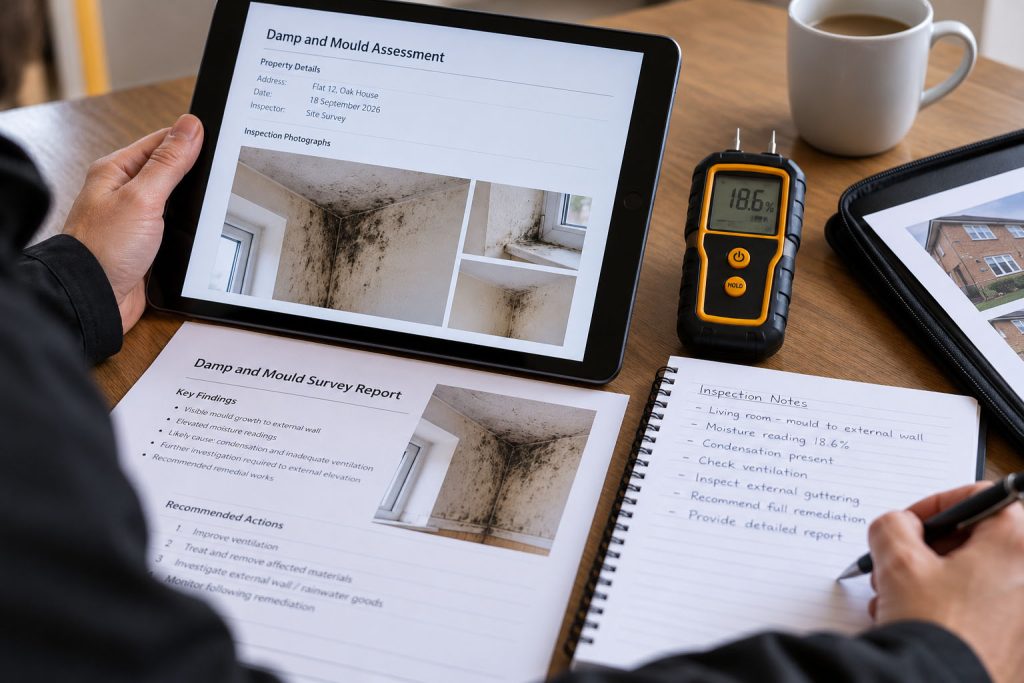
The exact investigation will depend on the property and the reported problem. However, a professional assessment may include:
- A visual inspection of affected areas
- Moisture readings
- Assessment of ventilation and condensation
- Inspection for leaks and water ingress
- Inspection of relevant building defects
- Photographic evidence
- Identification of likely causes
- Recommendations for remedial work
For landlords and housing providers, clear records can also help demonstrate what was found, when the property was inspected and what action was recommended.
The Importance of Damp and Mould Reporting
Good reporting is particularly important when managing large numbers of properties.
A clear damp and mould report can help housing teams understand the condition of the property and communicate the required action to contractors, maintenance teams and residents.
Reports may include:
- Details of the areas inspected
- Photographs of affected areas
- Moisture readings where appropriate
- Likely causes of damp or mould
- Recommended remedial work
- Priorities or next steps
This can reduce the risk of repeated visits where the underlying problem has not been properly identified.
What Happens After a Damp and Mould Survey?
Once the cause of the problem has been identified, the appropriate remedial work can be planned.
Depending on the property, this may include:
- Mould remediation and treatment
- Improved ventilation
- Repairing plumbing leaks
- Resolving water ingress
- Repairs to roofs, guttering or external walls
- Damp-proofing measures
- Removing or replacing damaged materials
- Repairing internal finishes
The appropriate solution should be based on the identified cause rather than using the same treatment for every property.
What Changes Under Phase 2 of Awaab’s Law?
Phase 2 of Awaab’s Law comes into force on 30 November 2026.
From that date, the requirements will extend beyond damp and mould to include additional hazards where they present a significant risk of harm. These include hazards such as excess cold, excess heat, falls and structural collapse.
Damp and mould will therefore remain an important part of the regulations, but housing providers will need systems capable of responding to a wider range of property hazards.
How Abbott Contractors Can Support Housing Providers
Abbott Contractors provides professional damp and mould investigation, reporting and remediation services for landlords, housing associations and property managers.
Our services can include:
- Damp and mould surveys
- Investigation of recurring mould problems
- Moisture assessment
- Photographic reporting
- Recommendations for remedial work
- Professional mould remediation
- Associated building and maintenance repairs
Because Abbott Contractors provides a broad range of property maintenance and building services, our team can also help coordinate associated repairs where the cause of damp or mould involves plumbing, building defects or other maintenance issues.

Frequently Asked Questions About Awaab’s Law and Damp & Mould
Does Awaab’s Law apply to all landlords?
No. Awaab’s Law currently applies to social landlords in England. Private landlords have separate legal responsibilities relating to the condition and safety of rented properties.
How quickly must social landlords investigate damp and mould?
Potential significant damp and mould hazards must generally be investigated within 10 working days under Awaab’s Law.
How quickly must a significant damp and mould hazard be made safe?
Where the investigation identifies a significant damp and mould hazard, the landlord must generally make the property safe within 5 working days after the investigation has finished.
What happens if damp or mould is an emergency?
Emergency hazards must be investigated and made safe within 24 hours.
Does mould cleaning satisfy Awaab’s Law?
That depends on the nature and cause of the hazard. Cleaning visible mould may not resolve an underlying moisture problem. Where further remedial work is required, the underlying cause should also be addressed.
Can Abbott Contractors work with housing associations?
Yes. Abbott Contractors provides damp and mould surveys, investigation, reporting and remediation services for housing associations, landlords and property management organisations.
Need Support With Damp and Mould in Social Housing?
Effective damp and mould management starts with identifying the cause and acting on clear evidence.
Abbott Contractors provides damp and mould surveys and remediation services for housing providers, landlords and property managers, with investigation, reporting and remedial work available as required.
Contact Abbott Contractors to discuss damp and mould surveys, remediation or ongoing housing maintenance requirements.
This article provides general information and should not be treated as legal advice. Housing providers should refer to the current Awaab’s Law regulations and official government guidance when determining their legal obligations.